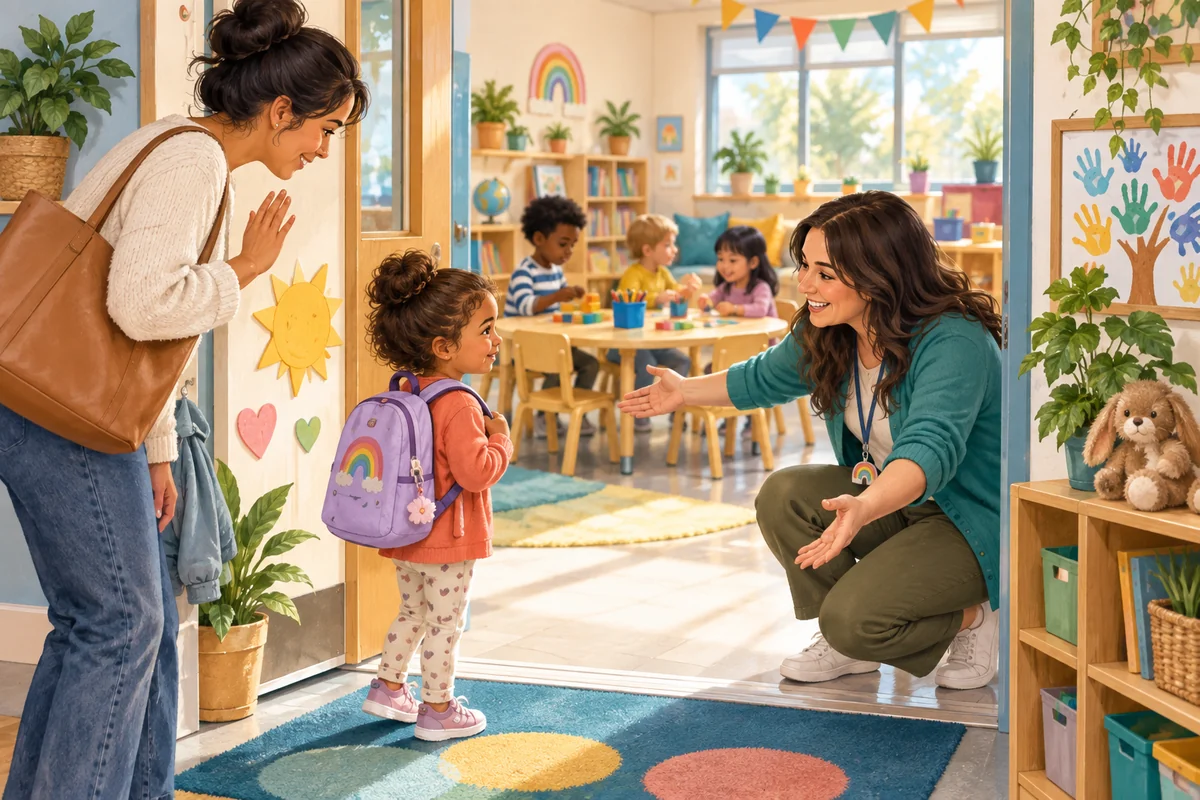
Some children leap into new activities. Others need time to watch, ask questions and feel steady. This original story gives courage a gentle shape: not “be brave right now,” but “take one small step with someone kind nearby.”
Read the story · Try the small-step activity
Lila and the Wobbly Scooter
Lila liked her blue shoes, her yellow cup and the same swing at the park. She liked knowing where things were and what would happen next.
One morning, Dad carried a small green scooter to the path. It had a silver bell and handles shaped like sleepy ears. Dad set it on the flat, empty practice area away from the road.
“Would you like to try?” Dad asked.
Lila stepped behind Dad’s leg. “It is too wobbly.”
Her older friend Sami rolled past slowly on his scooter, wearing his helmet. Ring-ring went his bell. Zoom went his wheels. Sami smiled, but Lila’s tummy felt tight.
Dad sat beside her on the bench. “New things can feel big,” he said. “You do not have to zoom.”
“What do I have to do?” Lila asked.
“Nothing yet. First we can watch.”
So they watched. Sami put one foot on the scooter and one foot on the ground. Push, roll, stop. Push, roll, stop.
“He knows how to stop,” Lila whispered.
“We will practise stopping before we roll,” Dad said.
The scooter waited beside them. It did not ring its bell. It did not hurry her. Lila touched one handle with one finger.
“Cold,” she said.
“That was a try,” Dad said.
“That was just touching.”
“Touching is one small step.”
Lila looked at the scooter again. “Can you hold it?”
Dad helped Lila fasten her helmet and put on her elbow and knee pads. Then he held the handles. Lila put both hands on them too. The scooter stayed still.
“Now my hands are trying,” she said.
Next, Dad kept one hand on the scooter while Lila placed one blue shoe on the deck. Her other shoe stayed on the ground, ready and strong.
The scooter leaned a little. Lila leaned into Dad.
“Wobbly,” she said.
“I feel it too,” Dad said. “We can stop.”
Lila stepped off. They sat on the bench and watched a beetle cross a leaf.
After a while, Lila said, “I would like one tiny push now.” Dad helped her get ready again.
Dad walked beside her. Lila pushed with her ground foot. The scooter rolled from one chalk star to the next.
It was not a zoom. It was a tiny roll. But it was a roll.
“I did one!” Lila said.
Sami came back slowly. “Want to ring the bell?”
Lila looked at Dad. Dad nodded.
Ring-ring.
The bell sounded bright, like a small celebration.
“Another push or a rest?” Dad asked.
“A rest,” said Lila. She parked beside him and watched Sami. She had wobbled. She had tried. And she could decide when she had done enough.
But the path did not look as long now.
When it was time to go home, Dad carried the scooter.
“Did I learn it?” she asked.
“You started learning it,” Dad said. “Starting counts.”
Lila patted the green scooter. “Tomorrow I might try two chalk stars.”
The scooter waited quietly. Lila walked home holding Dad’s hand. “Starting counts,” she said. “And stopping is allowed.”
Keep gentle stories ready for brave little moments
Baboo Stories gives parents short, kind stories to read aloud before bedtime, preschool mornings and everyday family moments.
Baboo Stories is free to download. Some stories are locked, and an optional monthly subscription unlocks all stories.


Watch, try together, one small step
Choose a suitable everyday activity: making one mark with a new crayon, joining one verse of a song, or watching a craft before taking part. The story is about choice and support, not a scooter lesson. The American Academy of Pediatrics recommends protective gear, keeping away from traffic and close supervision for children under eight. Choose an activity that fits your child’s age and abilities.
- Watch: Let your child observe the new thing without joining. Name what they notice.
- Try together: Hold the handle, sit beside them, start with the easiest part, or model it yourself.
- One small step: Pick a tiny action that can end quickly: one crayon mark, one wave, or one verse of a song. Let watching or stopping be the whole activity today.
Use language that separates courage from performance: “You watched carefully,” “You tried one part,” or “You stopped when your body needed a break.”
Gentle questions after the story
- What made the scooter feel new to Lila?
- What helped her feel steady?
- Would you like to watch, try together, or leave it for another day?
Related reading
If the new thing is preschool, read our first day of preschool story. If your child prefers pretend practice, try story role play for kids. For a wider guide, visit social stories for preschoolers.
Sources and further reading
ZERO TO THREE’s guide to social-emotional development at 24–36 months discusses naming feelings and using pretend stories to explore everyday frustrations. These original stories offer words to share; they do not promise a particular response from your child.
Questions parents often ask
How can stories help a child try something new?
This story gives you a shared example of watching first, asking for help, taking a small step and stopping. Your child may simply enjoy listening; trying the activity is optional.
Should I push my child to try the new thing right away?
No. Offer watching, trying together or leaving the activity for another day. A story is an invitation to talk, not a deadline to do what the character does.