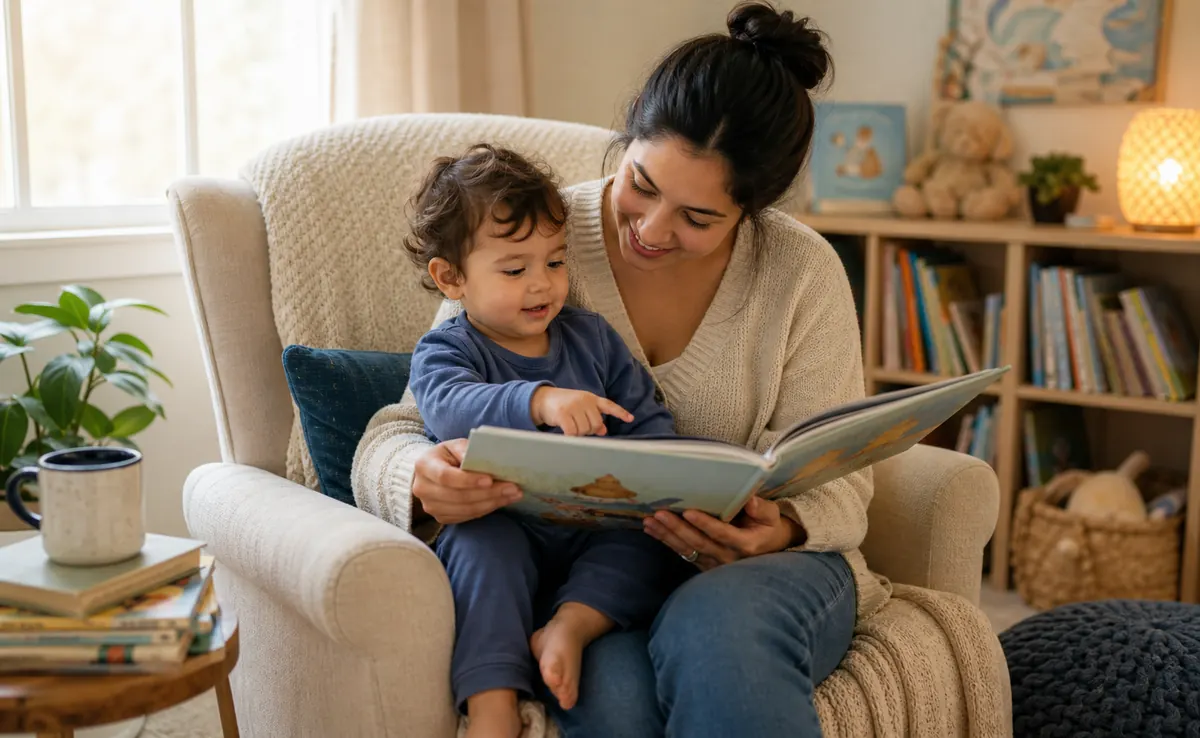
Many parents think story time is simply a calm way to end the day. It can be that, of course. A short story, a soft voice, and a child tucked close can turn a busy evening into something gentler.
But inside that ordinary moment, something remarkable is happening. Every story your child hears gives the developing brain a chance to practice language, memory, imagination, emotional understanding, and learning. While your child laughs at a funny character or wonders what happens next, they are building skills they will use for years.
The best part is that story time does not require expensive educational toys or long structured lessons. Fifteen minutes of reading together each day can become one of the most meaningful investments you make in your child's future.
Story time is more than entertainment
Stories entertain, but entertainment is only the surface. Behind every story, your child's brain is actively working.
Unlike fast-moving videos that show every detail, listening to a story asks children to create part of the world inside their own minds. They imagine the forest. They picture the dragon. They remember who the characters are. They predict what might happen next.
That mental work is exactly why the benefits of story time are so broad. A child is not only hearing a story. They are practicing how to listen, think, connect ideas, and build meaning.
What you can explore together during a story
Story time works like a small daily workout for several important learning systems at once. It is gentle, playful, and relational, but the learning underneath is real.
Language centers wake up
Every sentence introduces words, sounds, rhythm, grammar, and meaning. Your child begins connecting unfamiliar words with familiar experiences: moon, sleepy, brave, whisper, enormous, disappointed.
See the nursery-rhyme benefits for toddlers for a closer look at how rhyme and repetition support playful language practice.
Over time, those tiny connections become vocabulary. Vocabulary becomes communication. Communication becomes confidence. This is why reading stories to toddlers can be so powerful even when they do not sit still for every page.
Memory starts working
Stories require remembering. Who is this character? What happened earlier? Why is everyone looking for the rabbit? Each answer asks your child to hold information in mind and connect it to the next part of the story.
Repeated favorites make this even stronger. When a child hears the same story again, they begin to anticipate lines, remember patterns, and feel the confidence of knowing what comes next.
The brain learns prediction
Children naturally begin asking, "What happens next?" That question is more than curiosity. It is early pattern recognition.
When children predict what a character might do, they practice cause and effect. If the bear forgot his umbrella, what might happen in the rain? If the little girl shares her snack, how might her friend feel? These tiny predictions prepare children for problem solving later in life.
Imagination comes alive
Books and parent-led stories leave room for imagination. Instead of being handed every visual, a child builds their own pictures. One child may imagine a huge purple mountain. Another may imagine the same mountain as soft and snowy.
That flexibility matters. Imagination is not only play. It is a child practicing possibility, perspective, and creative problem solving.
Emotional intelligence grows
Stories introduce emotions safely: fear, kindness, friendship, disappointment, pride, patience, joy. A child can meet these feelings through characters before they have the words to explain them in real life.
Parent-led storytelling makes this even richer because the parent can pause and ask a gentle question: "How do you think she feels?" or "What could he do next?" Those little conversations turn story time into emotional practice.
Attention span improves
Listening requires focus. At first, a toddler may wiggle, interrupt, point, or wander. That is normal. Attention grows gradually when the routine feels safe and the story is short enough to enjoy.
Over time, daily story time helps children become more comfortable following a sequence, waiting for the next sentence, and staying with an idea. Those are useful foundations for classroom learning.
Story time builds school-ready learning skills
Parents often ask, "How can I prepare my child for school?" The answer is not always flash cards or educational apps. Story time naturally develops many of the same abilities that school depends on. Families preparing for a new classroom can also use our first day of preschool story and goodbye plan to make the sequence easier to picture.
Through daily story time, children practice how to:
- follow sequences from beginning to middle to end,
- understand cause and effect,
- recognize patterns and repeated phrases,
- remember information from earlier in the story,
- listen carefully to another person's words,
- build vocabulary and sentence awareness,
- ask thoughtful questions, and
- express ideas clearly.
These are lifelong learning skills, not just reading skills. A child who learns to follow a story is also practicing how to follow an explanation, a conversation, a classroom instruction, and later, their own ideas.
Why parent-led storytelling is different
A child can watch a story, or they can experience a story with someone they love. The difference is not small.
When parents read aloud, children hear familiar voices. They ask questions. Parents pause, explain, laugh, repeat, and sometimes use wonderfully silly voices. Those small interactions cannot be replaced by autoplay videos because they are responsive.
Harvard's Center on the Developing Child describes responsive back-and-forth exchanges between young children and caring adults as important for brain architecture, early language, and social skills. Story time naturally creates space for that kind of exchange when a parent notices, responds, and keeps the child engaged. Read Harvard's guide to serve and return interactions.
That is also why Baboo Stories focuses on parent-led storytelling instead of auto-play story sessions. The story matters, but the relationship around the story matters too.
Story time builds families, not just readers
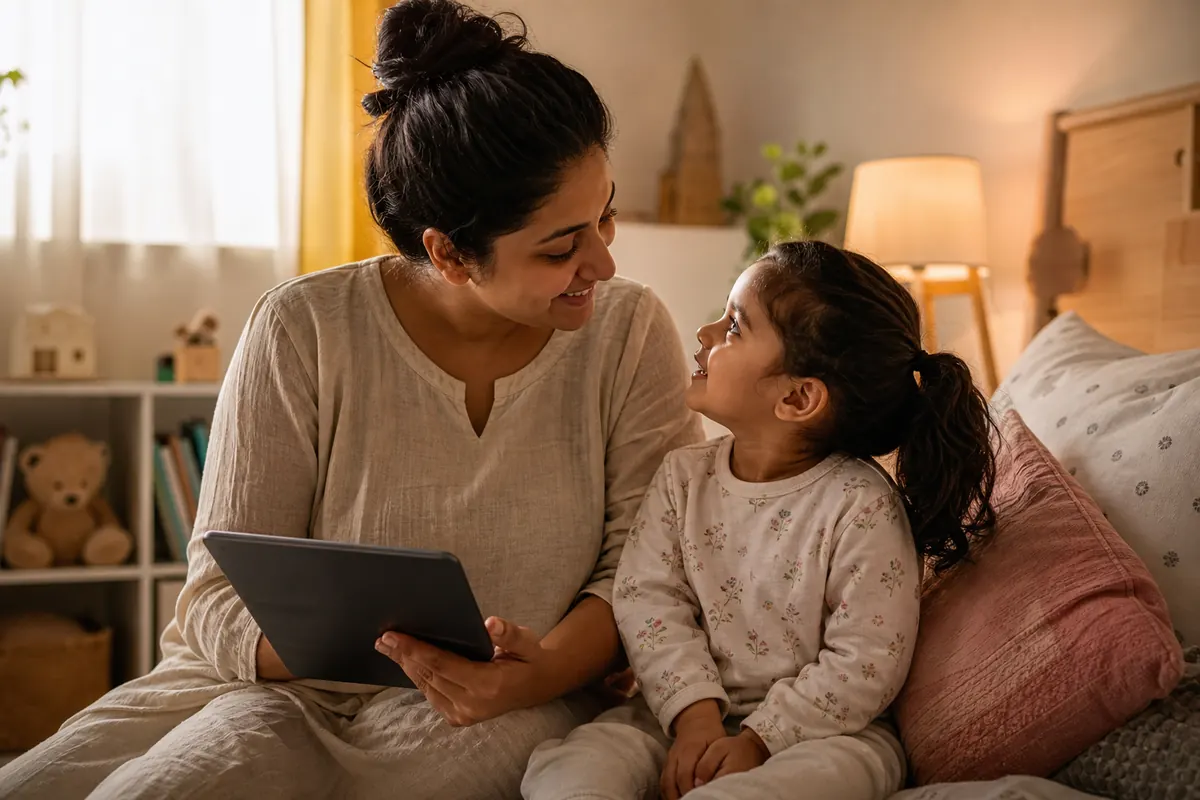
Years later, children rarely remember every story. They remember who read it. The bedtime giggles. The funny voices. The cuddles. The feeling of safety.
Story time is not simply about raising readers. It is about building trust, connection, and family traditions that children can carry into adulthood.
For many families, the simplest rhythm works best: choose one short story, read it slowly, let your child react, and end with the same warm goodnight phrase. If evenings are hard, start with a calm toddler bedtime routine and let story time become the signal that the day is ending.
How to make story time part of every day
You do not need a huge library, a perfect reading voice, or a long block of quiet time. The goal is consistency, not performance.
- Start small. Five to ten minutes is enough on tired nights.
- Keep it predictable. Try the same place, same order, and same closing phrase.
- Let your child participate. Invite pointing, sound effects, small predictions, and repeated lines.
- Use gentle prompts. Ask one simple question, then keep moving if your child is sleepy.
- Choose stories that match the moment. Use calm bedtime stories at night and more playful stories earlier in the day.
Need more practical help? Start with how to read stories to toddlers, try gentle storytelling prompts for kids, or use a 5-minute bedtime story routine on busy weeknights. Expecting parents can also begin with reading to baby in the womb as a gentle first family story habit.
Common questions parents ask
Is 10 minutes enough?
Yes. Consistency matters more than duration. Ten warm, connected minutes every day can be more useful than a long session that only happens once in a while.
What if my toddler will not sit still?
That is completely normal. Children do not have to sit perfectly still to benefit. Listening while cuddling, drawing, turning pages, or holding a favorite toy still counts.
What age should story time begin?
Babies benefit from familiar voices, rhythm, closeness, and repeated language. The earlier story time becomes part of everyday life, the more natural the habit feels.
Should I read the same story again?
Absolutely. Repetition helps children remember words, anticipate events, and build confidence. What feels repetitive to adults often feels comforting and exciting to young children.
Final thought
Story time does not need to be perfect to matter. You simply need a few minutes together every day.
A shared story gives you time to talk, notice what interests your child and enjoy each other’s company. Children’s responses and learning vary.
Sources and further reading
- Harvard Center on the Developing Child: Serve and Return
- American Academy of Pediatrics policy statement on literacy promotion
Build a daily story time habit with Baboo Stories
Baboo Stories is creating a growing library of short, parent-led stories designed to make reading together simple, gentle, and part of everyday family life.


For stories you can read in your own voice, explore Baboo Stories. The app is free to download; an optional monthly subscription unlocks all stories.