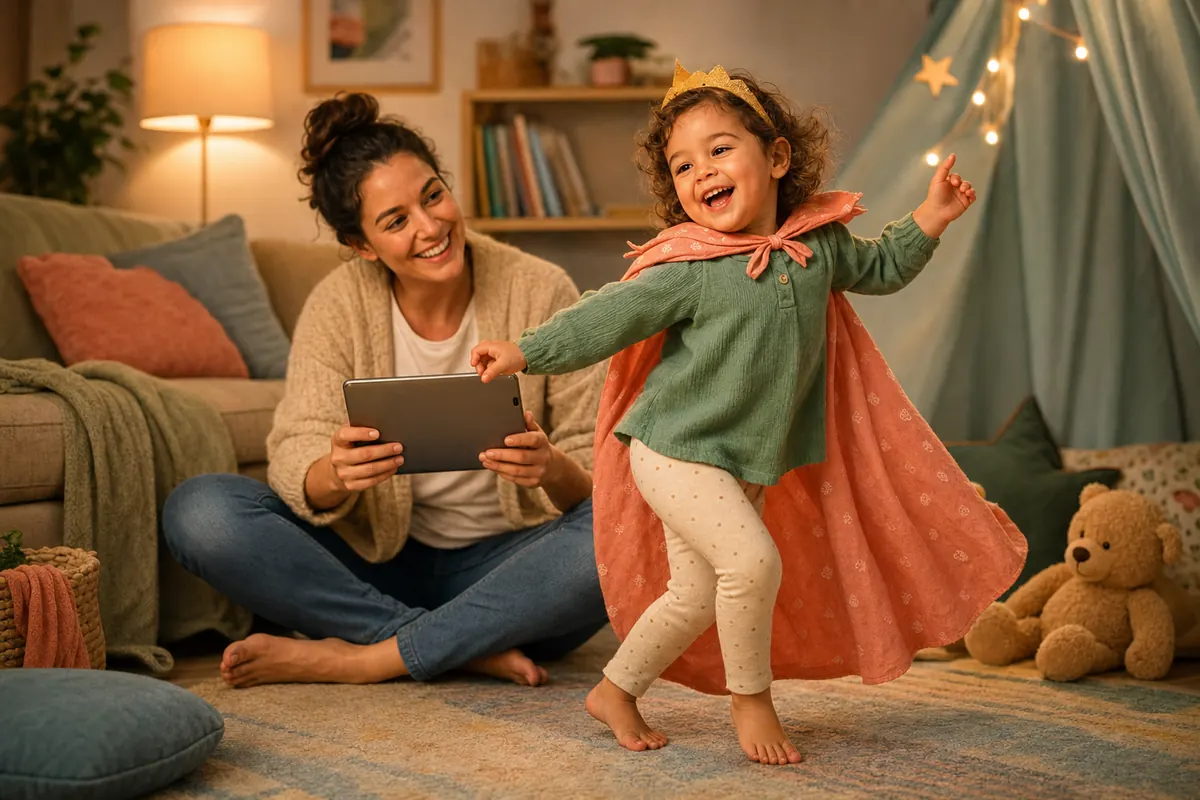
Many parents feel stuck between two honest thoughts: I want less screen time and I also need an easy way to find a good story tonight. A printed book is lovely, but it is not always nearby. A phone is nearby. A tablet may already have the story your child wants. So the question becomes practical, not perfect: is reading from a phone screen time?
The short answer is yes, it is still screen use. But it is not the same as handing a child a device for videos, games, scrolling, or autoplay. Reading from a phone can become a screen-light family routine when the parent uses the device as a quiet reading tool and keeps the child focused on listening, imagining, and talking.
Not all screen use feels the same
A child passively watching a fast video is having a different experience from a child listening to a parent read aloud from a phone. In one case, the screen performs and the child receives. In the other, the parent leads and the child shares attention with a trusted adult.
That distinction matters because story time is not only about words. It is about pace, warmth, turn-taking, questions, facial expressions, cuddles, and the small pauses where a child connects the story to their own world. A device can interrupt that. It can also support it, if the parent keeps the relationship at the center.
When a phone becomes passive screen time
Digital story time starts to drift into passive screen time when the child is mainly watching, tapping, or being pulled from one piece of content to the next. The warning signs are usually easy to spot:
- The child holds the device and keeps changing the story.
- Autoplay or recommended videos decide what comes next.
- The parent has stepped out of the reading moment.
- The story has no clear ending.
- Bright animation, sound, or games become the main attraction.
- Stopping creates a bigger battle than starting.
None of this means parents have failed. It only means the device is leading. At bedtime especially, that can make the evening feel harder to close.
When a phone becomes a reading tool
A phone or tablet becomes a reading tool when the parent uses it the way they might use a book: choose one story, read aloud, pause, respond, and finish. The child may see the screen, but the screen is not the star of the moment.
A screen-light story routine usually looks like this:
- Parent holds the device. The child can look, but the parent leads.
- One story is chosen before reading starts. This avoids a menu becoming the activity.
- Brightness is low and notifications are off. The device feels quieter.
- The parent reads aloud. The voice, not the screen, carries the story.
- The child gets one small invitation. Ask, "What do you think happens next?" or "How does the bunny feel?"
- The app closes when the story ends. A clear ending protects the routine.
Screen-free, screen-light, and screen-led
These three labels can help parents make calmer choices without turning story time into a debate.
| Type | What it looks like | Best use |
|---|---|---|
| Screen-free | Printed book, oral story, audio with the screen away | When the family wants no device in the room |
| Screen-light | Parent reads from a phone or tablet with low stimulation | When a digital story helps the parent lead |
| Screen-led | Child watches, taps, scrolls, or follows autoplay | Better kept away from bedtime when possible |
Why parent-led reading changes the experience
Young children need more than content. They need shared attention. A parent can notice when the child is confused, skip a line when the child is tired, repeat a funny phrase, soften their voice, or stop before the routine falls apart. An app cannot read the room in the same human way.
This is why parent-led digital story time can be useful. The app supplies the story, but the parent supplies the relationship. That keeps the moment closer to shared reading than passive media.
If you want a deeper comparison, read our guide to parent-led storytelling vs auto-play story apps.
Is phone reading okay before bed?
Bedtime is the place to be most careful. The American Academy of Pediatrics encourages families to protect sleep and family interaction when making media choices, and many sleep resources recommend reducing stimulating screen use before bed. A recent randomized clinical trial also found that removing toddler screen time in the hour before bed was feasible for families and showed modest preliminary sleep benefits.
That does not mean a parent can never glance at a digital story. It means the routine should be quiet, brief, parent-led, and easy to end. If the phone leads to brightness, tapping, bargaining, or "one more video," it is probably the wrong tool for that moment.
For a full bedtime replacement plan, start with Toddler Wants Screen Time Before Bed?.
A 5-minute screen-light story routine
On tired nights, use the smallest version that still feels warm:
- Say, "We are choosing one story, then the screen rests."
- Let your child choose between two gentle story options.
- Lower the brightness and hold the device yourself.
- Read slowly, with one pause for your child to answer or point.
- Close the app and repeat the same goodnight phrase.
This routine works because it gives the child a little choice, but not endless choice. It also gives the parent a clear stopping point.
How Baboo Stories fits
Baboo Stories is built for this screen-light middle ground. It is not designed to replace parents with autoplay videos. It gives parents short, gentle stories they can read aloud, with the adult voice and parent-child connection still at the center.
Use Baboo the way you would use a small bedtime book: choose one story, read it in your own voice, ask one soft question if your child is still awake enough, then close. The value is not that the phone is magical. The value is that it helps you show up with a story when the evening is already full.
Try one screen-light story tonight
Open Baboo Stories, choose one gentle story, and read it aloud while your child listens, imagines, and winds down with your voice.


Common questions parents ask
Is reading from a phone screen time?
Yes, it is screen use, but it is not automatically the same as passive screen time. The healthier version is parent-led, brief, calm, and focused on reading aloud rather than watching.
Should my child hold the phone during story time?
For toddlers and preschoolers, it usually works better if the parent holds the phone. That keeps the focus on the story and avoids tapping, scrolling, or switching.
Can a tablet replace printed books?
It should not replace printed books completely. A tablet can add flexibility when you need fresh stories, travel options, or a quick bedtime choice, but printed books and oral stories still matter.
What is the safest way to use a story app at bedtime?
Choose one story, keep brightness low, silence notifications, avoid autoplay, read aloud yourself, and close the app when the story ends.