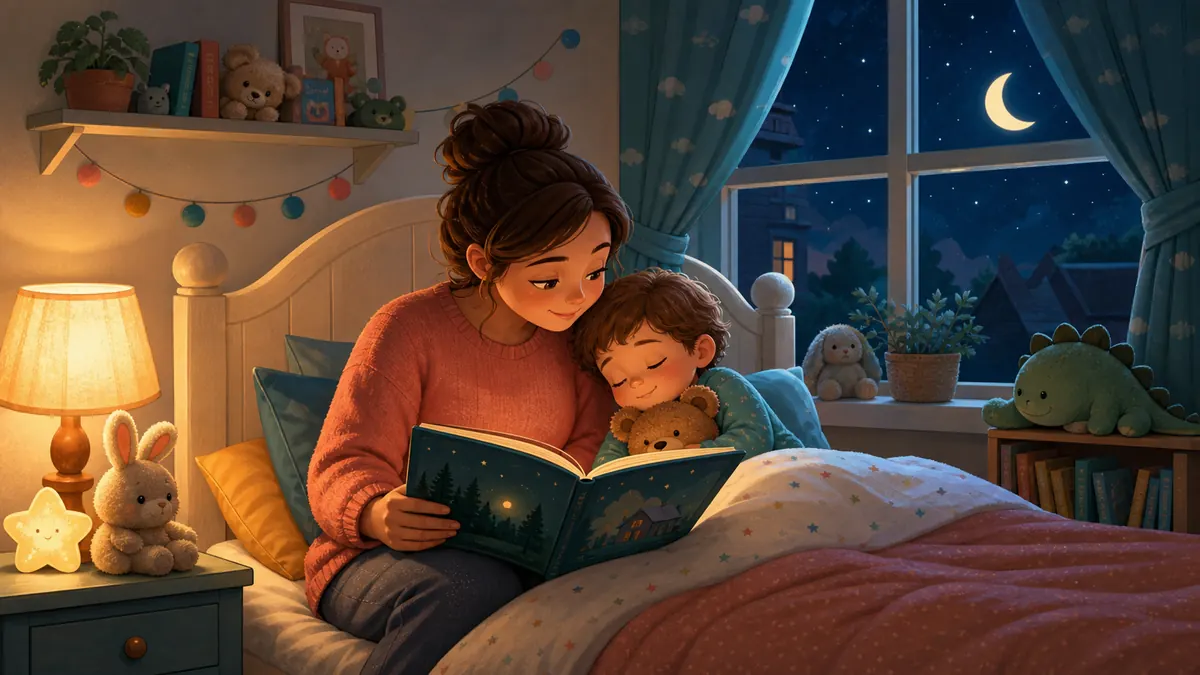
Many toddlers go through anxious bedtime seasons. They may worry about the dark, separation, tomorrow, a new room, a loud sound, a bad dream, or something they cannot quite explain. Their words may be small, but the feeling can be big.
Bedtime stories can help when they are used gently. They give a child a safe little world where a character feels unsure, receives help, and finds a calm ending. This is not a cure or a medical promise. It is one parent-friendly tool inside a steady routine.
What anxious toddlers need from bedtime stories
For anxious toddlers, the best bedtime stories are usually not the most exciting stories. They are the stories with a clear shape: beginning, small worry, kind support, safe ending. The story should not introduce frightening villains, sudden danger, intense chase scenes, or cliffhangers right before lights out.
Look for stories that offer three things:
- Familiar settings: home, garden, bath, bed, park, or a cozy path.
- Small problems: a missing toy, a new sound, a shy hello, or a first try.
- Reliable comfort: a parent, friend, routine, blanket, song, or return home.
Story themes that work well for anxious toddlers
Swipe or scroll horizontally to compare all columns.
| Worry at bedtime | Helpful story theme | Gentle ending |
|---|---|---|
| Darkness | Moonlight, night garden, friendly shadows | The room is quiet and familiar |
| Separation | A character returns home after a short trip | The grown-up always comes back |
| Bad dreams | A dream becomes silly, soft, or tiny | The child wakes safe in bed |
| New experiences | A first try with a helper nearby | The character tries one small step |
| Loud sounds | Finding out what a sound belongs to | The sound becomes understandable |
A simple story structure for worried nights
If you are making up a story on the spot, use this tiny structure:
- Name a character your child likes.
- Give the character one small worry.
- Add a helper who listens first.
- Let the character take one small brave step.
- End with home, rest, or a goodnight phrase.
For example: "Mina heard a tap-tap at the window. She held Dad's hand and listened. Tap-tap. Tap-tap. It was only a leaf saying goodnight to the glass. Mina smiled, tucked her bear under the blanket, and whispered, 'Goodnight, little leaf.'"
Read slowly and keep your voice predictable
Your voice is part of the story. For an anxious toddler, dramatic voices may be too much at bedtime. Try a soft, steady read-aloud voice instead. Pause often. Let your child look at the picture or hold your hand. If a sentence feels too intense, soften it in your own words.
Parent-led reading is useful here because you can adapt the story in real time. If your child stiffens, skip ahead. If they relax, stay with the cozy parts. A good bedtime story is allowed to change in your voice.
Use one prompt, not ten questions
After the story, avoid opening a long conversation if your child is finally settling. One short prompt is enough:
- What helped the character feel safe?
- Who was kind in the story?
- What can we remember from the story tonight?
- Should we take one slow breath like the character?
If the worry is about starting a new classroom, save that problem-solving for daytime and try this first day of preschool story. If the worry is big or repeated, make a note to talk about it during the day. Daytime is usually better for problem-solving. Bedtime is better for comfort, closeness, and simple reassurance.
Two gentle sample stories for worried nights
Use these as tiny read-aloud models. Each one has a small worry, a helper, and a safe ending so the emotional shape stays easy for a toddler to follow.
What to avoid before sleep
Some stories are wonderful at other times of day but not ideal for anxious toddler bedtime. Be careful with scary creatures, sudden danger, mean teasing, intense moral pressure, sad separations that linger, or endings that leave the child wondering what happens next.
If your child is sensitive, our guide to non-scary bedtime stories for toddlers can help you choose stories that feel safer before sleep.
When bedtime worries need more support
A calm story routine can support many ordinary toddler worries. But if anxiety is intense, lasts for a long time, affects daily life, or comes with major sleep disruption, it is worth talking with your child's pediatrician or a qualified child health professional.
You know your child best. A story can be part of care, but it does not replace care when more help is needed.
A parent checklist before you start reading
On worried nights, the first minute before the story can matter as much as the story itself. Before you begin, try this quick check:
- Is the room calm enough for your child to hear your voice?
- Did you choose a story with a safe, finished ending?
- Can you describe the story's worry in one simple sentence?
- Is the post-story question short enough to answer in bed?
- Do you have a predictable phrase to close the routine?
This checklist prevents the story from becoming one more bedtime decision. It also helps you stay steady if your child asks for "one more" story after the first one ends.
Why routine gives the story more power
A bedtime story works best when it belongs to a predictable pattern. Toddlers often settle more easily when the same few steps happen in the same order: wash, pajamas, one story, one prompt, one goodnight phrase. The story becomes a cue that says, "We know what happens next."
If your child is anxious, keep choices narrow. Offer two gentle stories instead of the whole shelf. Use the same reading spot when you can. Let your voice stay steady, even if the day was messy.
How Baboo Stories helps on worried nights
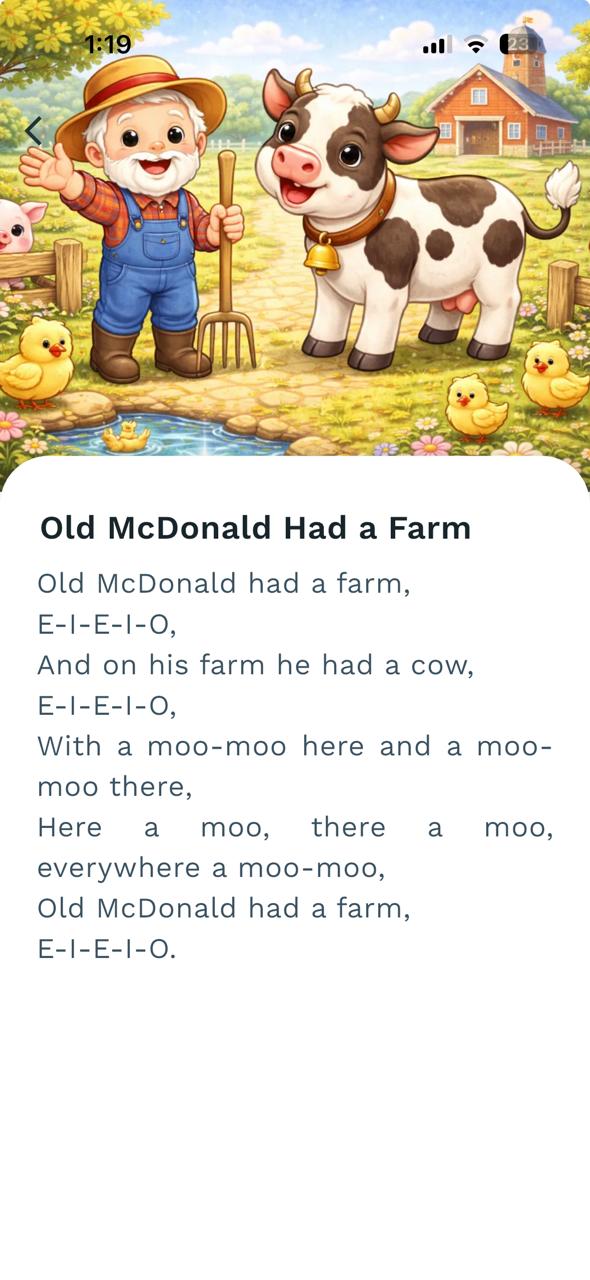
Baboo Stories is built for gentle, parent-led story moments. That means parents can choose short stories, read aloud in their own voice, pause when needed, and use simple prompts to help children name feelings. It is especially useful when you want a story app that supports connection instead of autoplay.
For a quick nightly approach, pair this guide with our article on 5-minute bedtime stories by mood and our calming bedtime prompts.
Common questions parents ask
Can stories make toddler anxiety worse?
They can if the story is too scary, too intense, or unresolved before sleep. Choose gentle stories with safe endings and avoid cliffhangers at bedtime.
What should I say if my child is scared after a story?
Keep it simple and calm. You might say, "That part felt big. You are safe here with me. Let's remember the cozy ending." Then move back to the bedtime routine.
Are bedtime stories better than sleep audio?
It depends on the child. For anxious toddlers, parent-led read-aloud stories can be especially comforting because the parent's voice and presence stay central.
More bedtime reading from Baboo
If bedtime is taking too long, read Toddler Won't Sleep? Try a Simple Bedtime Story Routine. If screen time is part of the struggle, see toddler screen time before bed.
Sources and further reading
- Sleep Foundation: Sleep Strategies for Kids
- CDC: Tips for Building Structure
- American Academy of Pediatrics: Sleep
Keep worried nights gentle
Baboo Stories helps parents choose calm read-aloud stories and simple prompts for softer bedtime moments.


For stories you can read in your own voice, explore Baboo Stories. The app is free to download; an optional monthly subscription unlocks all stories.