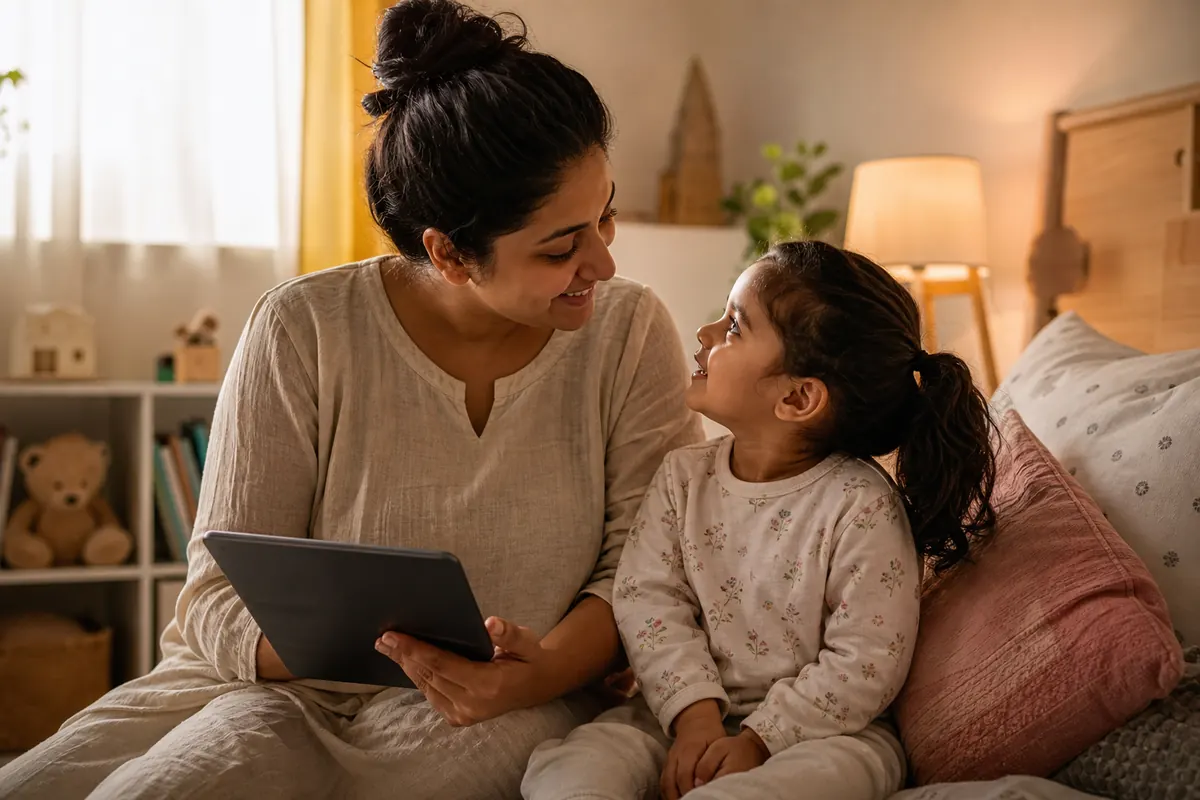
Some children love dragons, storms, shadows, and big adventures. That does not mean every exciting story belongs at bedtime. Toddlers are still learning how to separate pretend from real, how to name feelings, and how to settle their bodies after a busy day.
A non-scary bedtime story gives your child something interesting to imagine without leaving them alert, worried, or full of questions after lights out. It can still be magical. It can still be funny. It can still have a problem. It simply treats bedtime as a soft landing.
What makes a bedtime story non-scary?
Non-scary does not mean nothing happens. A story can have a missing button, a shy cloud, a lost picnic blanket, a tiny mistake, or a character learning to share. The difference is that the problem stays small enough for a toddler to hold.
A good non-scary bedtime story usually has:
- A familiar or cozy setting.
- Kind characters who help each other.
- A problem that is understandable, not frightening.
- No sudden danger, harsh punishment, or intense chase.
- An ending that feels complete and safe.
Gentle themes that work well before sleep
Swipe or scroll horizontally to compare all columns.
| Theme | Why it works | Story idea |
|---|---|---|
| Animals | Friendly and easy for toddlers to imagine | A rabbit finds the softest leaf for bedtime |
| Nature | Slow rhythms support calm pacing | A small cloud says goodnight to the garden |
| Family | Reinforces safety and connection | A child helps set the table, then reads with Dad |
| Kindness | Gives the story a warm emotional center | A bear shares a blanket with a chilly friend |
| Coming home | Creates a finished, reassuring ending | A little boat returns to its quiet dock |
What to avoid in toddler bedtime stories
Many classic stories include danger, villains, abandonment, dark forests, monsters, or punishment. Those stories may be part of a family's reading life later, or at a different time of day. But for toddlers before sleep, it is wise to be selective.
Consider saving these for daytime:
- Stories where a child is lost for a long time.
- Stories with monsters, witches, or threatening strangers.
- Stories with loud conflict or repeated danger.
- Stories that end with a cliffhanger.
- Stories that make your child ask worried questions in bed.
If you want the fuller reasoning, read our related guide: Are Scary Stories Healthy for Toddlers?
A bedtime safety test for any story
Before reading a new story at night, scan the final few pages or the ending first. Then ask three quick questions:
- Does the story end with the child feeling safe?
- Would the main problem still feel small in a dark bedroom?
- Can I explain the hard part in gentle words if my child asks?
If the answer is no, the story may still be worth reading during the day. Bedtime is simply a different job. At bedtime, the story should help the child's imagination slow down.
How to make an exciting story gentler
You do not always need a new book. Sometimes you can adapt the story in your own voice. This is one of the quiet superpowers of parent-led reading.
- Change "scary" to "surprising."
- Change "lost" to "looking for the way home."
- Make loud sounds understandable: wind, leaves, rain, or a door.
- Skip a scene if your child seems tense.
- Add a helper sooner.
- End with home, warmth, or a familiar bedtime phrase.
Toddlers do not need the original version of every story. They need the version that meets them kindly tonight.
A non-scary bedtime story formula
Use this formula when you need a quick story:
- Pick a gentle character: a kitten, moon, sock, leaf, or little train.
- Give them a tiny problem: something missing, new, messy, or confusing.
- Add a kind helper.
- Let the character try one small thing.
- End with rest.
Example: "A little train forgot which hill led home. The moon shone softly on the tracks. A sleepy bird pointed with one wing. The train puffed slowly, slowly, slowly, until it found the quiet station. Then it closed its little headlight and dreamed of morning."
Non-scary does not mean boring
Parents sometimes worry that gentle stories will not hold a child's attention. But toddlers often love small details: a button that rolls under a chair, a spoon that wants to stir soup, a cloud that changes shape, or a bear who cannot remember where pajamas go.
For young children, wonder can be tiny. A soft story can still invite imagination, laughter, language, and connection.
Three non-scary sample story openings
Strong toddler bedtime stories often begin with a small, knowable moment. These openings create curiosity without making the child brace for danger.
Best prompts after a non-scary story
Keep the post-story prompt calm and short:
- What was the kindest part?
- Where did the character feel safe?
- What would you say goodnight to in the story?
- Which cozy thing should we remember?
If your child is already sleepy, you can skip the prompt. A cuddle and a repeated goodnight phrase are enough.
How Baboo Stories fits non-scary bedtime
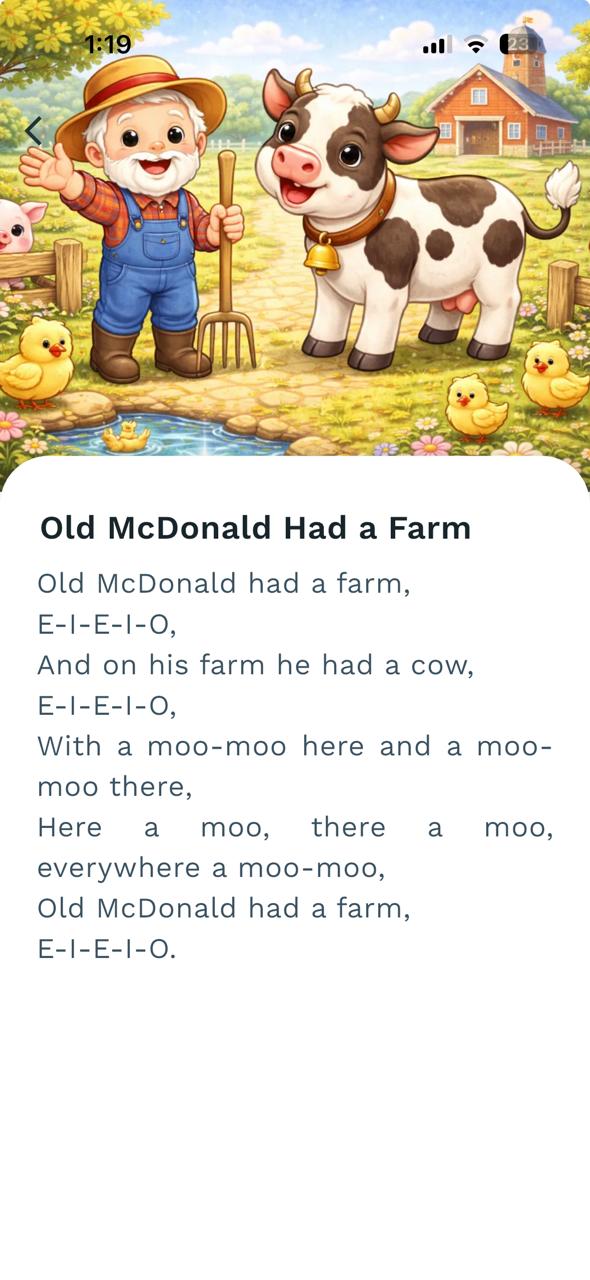
Baboo Stories is built around gentle, parent-led read-aloud moments. The stories are designed for toddlers and young children, with calm themes, room for parent adaptation, and prompts that support connection. The goal is not to overstimulate bedtime. The goal is to help families end the day with kindness and imagination.
If your child often feels worried at night, continue with bedtime stories for anxious toddlers. If you want quick choices by feeling, use 5-minute bedtime stories by mood.
Common questions parents ask
Are fairy tales too scary for toddlers?
Some fairy tales are too intense for toddler bedtime, especially if they include danger, abandonment, or frightening villains. Softer retellings or daytime reading may work better.
Can toddlers enjoy adventure stories before bed?
Yes, if the adventure is gentle and resolves calmly. A bedtime adventure should slow down near the end and leave the child feeling safe.
What if my child asks for a scary story?
You can offer a "slightly mysterious but safe" version. Keep the suspense mild, add a helper early, and make the ending cozy and complete.
More bedtime reading from Baboo
For named reading and listening options, see our comparison of the best bedtime story apps for kids, then use the story checklist above to preview your choice.
For broader app guidance, read the best bedtime story app for toddlers checklist. For daily routine support, read bedtime routines for toddlers.
Sources and further reading
- Sleep Foundation: Sleep Strategies for Kids
- CDC: Tips for Building Structure
- American Academy of Pediatrics: Family Media Plan
Bring gentler stories into bedtime
Baboo Stories gives parents calm, non-scary read-aloud stories and prompts for connected family storytime.


For stories you can read in your own voice, explore Baboo Stories. The app is free to download; an optional monthly subscription unlocks all stories.