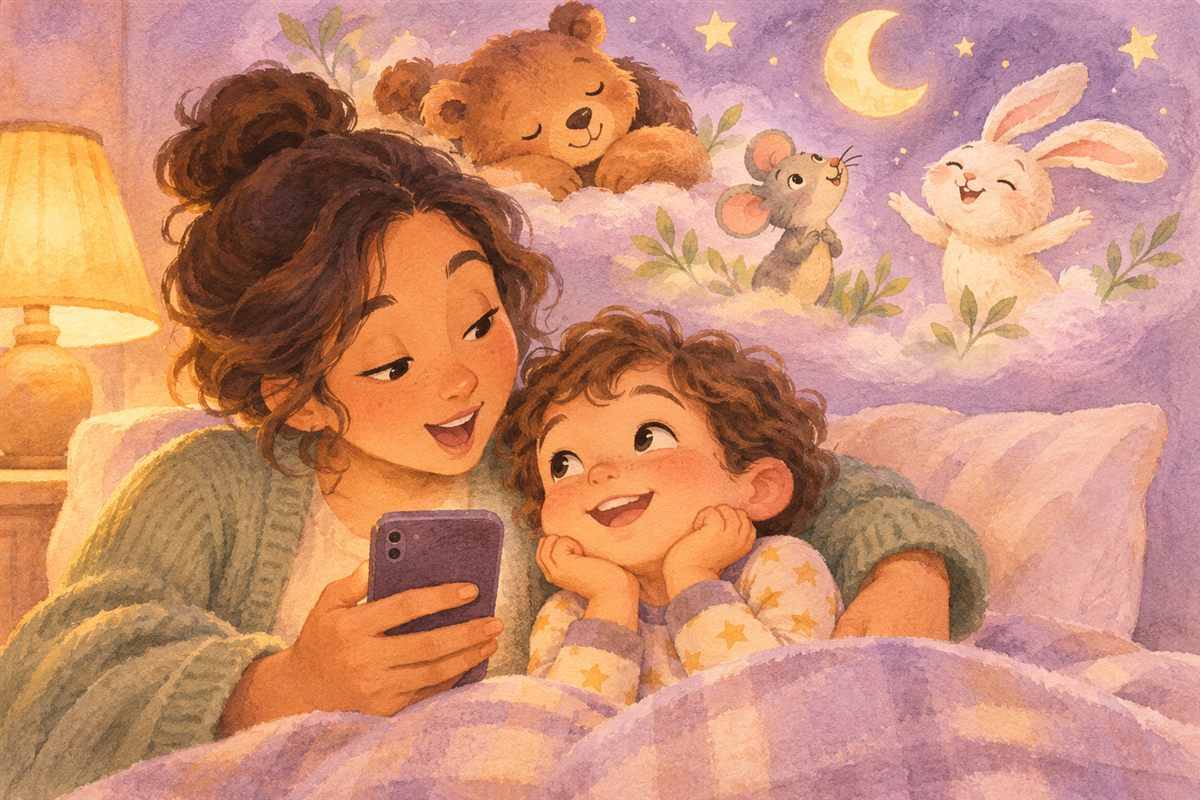
Picture this: it's bedtime, you've finally settled down together, and the story says, “said the bear.” Your child looks up, waiting. You wonder what on earth a bear is supposed to sound like. Try saying the next line a little more slowly than usual. That might be all it takes to get a giggle, or a sleepy smile.
And on the evenings when you are too tired to do the bear voice? Read it normally. Your familiar voice is already part of the storytime your child knows.
The easiest way to do character voices when reading to kids is to change just one thing about your normal voice: pitch (higher or lower), speed (faster or slower), or expression (how the character feels). Use your everyday voice for the narrator, and pick one or two characters to try.
Seven character voices to try tonight
Say each line in your usual voice first, then try the suggested change. These are playful starting points, not rules about what animals must sound like.
Swipe or scroll horizontally to see the examples.
| Character | How to sound | Try saying |
|---|---|---|
| Sleepy bear | Slow, slightly lower, relaxed | “Is it time for my blanket yet?” |
| Curious mouse | A little higher, with short pauses | “What's inside that tiny box?” |
| Wise owl | Steady with thoughtful pauses | “Hmm… let us look a little closer.” |
| Excited rabbit | Bright and bouncy, without shouting | “Look! I found three carrots!” |
| Gentle giant | Comfortably low and unhurried | “Come along, little friend.” |
| Shy turtle | Soft, clear, and slightly hesitant | “May I sit beside you?” |
| Playful fox | Warm, lively, with a smile | “I have a little surprise for you.” |
Pick whichever feels easiest. Try asking, “Shall our bear sound sleepy or silly tonight?” Your child might surprise you with a completely different bear voice. Go along with it for a line or two, if you like. If they just listen, that's fine too.
How to switch voices without losing the story
- Read the next sentence quietly to yourself. Look for who is speaking and how they feel.
- Give that character one voice cue. A slower pace for bear, for example, is easier to remember than a complicated accent.
- Pause before the dialogue. A small pause helps you shift from your normal narrator voice to the character.
- Return to your everyday voice afterward. If you forget a voice, keep reading. The shared moment is more important than perfect consistency.
A one-minute practice story: Bear's missing moon
Read the directions in brackets to yourself. Say the dialogue aloud, and let your child join in if they want to.
Narrator (your usual voice): One quiet evening, Bear sat beside his window. The sky was cloudy.
Bear (slow and soft): “Oh dear. Where has the moon gone?”
Rabbit (bright and gentle): “Maybe it's hiding behind a cloud!”
Narrator: Bear and Rabbit waited together. A little breeze moved the cloud. A silver moon peeked out.
Bear: “There you are, Moon.”
Rabbit: “Goodnight, Moon!”
Narrator (slower now): Bear pulled his blanket up, Rabbit curled beside him, and they closed their eyes.
On another night, you might change the rabbit to a tiny mouse, or let your child say the last goodnight. You can read it exactly as it is, too.
Enjoyed reading that together?
Find another gentle story in Baboo Stories and give its characters your own voices. The app provides the story; you bring it to life.
Free to download, with some stories available free.
Keep funny voices gentle at bedtime
During daytime reading, a silly voice or sound effect might become a game. At bedtime, try making the same voice a little quieter and slower. There is no need to make a frightening character sound scary or to push your voice higher or lower than feels comfortable.
Notice your child's reaction. If they are delighted, you can keep going. If they look uncomfortable or become too excited to settle, return to your ordinary reading voice. You can leave out a voice altogether.
Why try reading aloud with expression?
Changing tone and pace can help a listener distinguish speakers and follow the mood of a story. A pause can also make room for your child to point, comment, or guess what comes next.
BookTrust's read-aloud guidance encourages expressive storytelling, including playful voices where appropriate. Reading Rockets also recommends varying pace, giving children time to respond, and noticing their reactions. The seven voices and practice story above are our own editorial examples, not tested educational techniques.
Frequently asked questions
What if I feel silly doing voices for my child?
Start with a single character or just make one sentence slower. You can also practice privately first. Your child may enjoy your familiar voice more than any impression.
Do I need a different voice for every character?
No. Two voices are plenty to begin with, and you can always read every character in your normal voice. The dialogue and illustrations can help tell characters apart.
Can I use voices with a two-year-old?
Yes, if they enjoy it. Keep the changes simple and follow their reaction. A little sound, repeated phrase, or facial expression may be all they need to join in.
Should I use funny accents?
You don't need to imitate an accent. Try changing your pace, mood, or pitch instead. Use a comfortable voice that sounds like you.
Make tonight's story your own
Baboo Stories was created by a parent who enjoys sharing stories with their child. Pick a short, gently written story and read it in your own voice. Add a sleepy bear, a quiet giggle, or whatever makes the moment yours.
Download for free. Some stories are locked; an optional monthly subscription unlocks all stories.