For tonight, pick one story below: a cup having quiet tea, a duck putting away its boots, or a toy bus finishing its day. Each has a complete ending and can be read straight from this page. No sign-up is needed.
Original website stories, not app excerpts. Read at your child’s pace; the short paragraphs leave room for pauses.
The Little Cup
A little blue cup stood on the kitchen table.
“Who will sit beside me?” wondered the cup.
A small plate came first. “I will,” said the plate.
A soft napkin came next. “I will too.”
Then a spoon arrived with a tiny clink.
“Not too loud,” said the cup. “We are having a quiet tea.”
A child poured a little water into the cup. The plate held a slice of pear. The napkin waited for a drip.
They sat together while the child ate the pear and took a sip.
When tea was finished, the cup had a wash. The plate had a wash. The spoon had a wash too.
The napkin folded into a small square.
“Will you sit beside me tomorrow?” asked the cup.
“Yes,” said the plate, the spoon and the napkin.
And the little blue cup rested on its shelf.
Try together: Let your child say “I will” when someone joins the cup. If they prefer to listen, keep going without a question.
Duck’s Two Boots
Duck came home from the garden.
One boot went tap. One boot went tap.
“Boots off,” said Duck.
Duck put one boot by the door. Where was the other boot?
There it was, still on Duck’s foot!
Duck pulled it off. Plop.
“Two boots, side by side,” said Duck.
Duck washed one foot. Then the other foot.
“Two feet, clean and dry.”
Duck put one slipper on. Then the other slipper.
The boots stayed by the door.
“You can rest here,” Duck told them. “We can go out tomorrow.”
Duck sat beside Dad with a little book.
Dad opened the book. Duck tucked both feet close.
Two boots by the door. Two slippers on the rug.
And one little Duck, ready for a hug.
Try together: Whisper “side by side” or point to your own feet. You can skip the prompt on a sleepy evening.
Keep another short story ready
If your child enjoys short stories with familiar words and repeating lines, Baboo Stories gives you more parent-led read-aloud choices for another evening.
The app is free to download. Some stories are locked, and an optional monthly subscription unlocks all stories.


The Little Bus Is Home
A little toy bus sat on the rug.
“One more trip,” said Sam.
Sam rolled the bus past the chair. Slowly, slowly.
The bus stopped beside a sock.
“This is not my home,” said the bus.
Sam rolled it past the table. Slowly, slowly.
The bus stopped beside a book.
“This is not my home,” said the bus.
Then Sam saw the toy basket.
Inside was a space beside a red car.
Sam lifted the bus into the space.
“This is my home,” said the bus.
The red car rested. The little bus rested.
Sam put the book on the shelf and the sock in the wash.
“Goodnight, little bus.”
The next trip could wait until morning.
What makes a good bedtime story for a two-year-old?
A useful story for this age does not need a complicated plot or a lesson at the end. It needs something your child can recognise, a small action they can follow, and an ending that feels complete. The best choice tonight is often the one that matches what already has their attention.
Start with familiar objects and routines
Cups, boots, toy vehicles, bath time, getting dressed and putting toys away give a young listener an easy place to enter the story. They can picture the object before they understand every word. A familiar routine can also make the sequence easier to follow: the boots come off, the slippers go on, and then it is time for a book and a hug.
Use repetition, sounds and join-in phrases
A repeated line gives your child a chance to listen first and join in when they want. Simple sounds such as tap, plop or clink can make a short story playful without adding a busy plot. You do not need to test whether your child remembers the words. Pause if they seem ready to speak, or keep reading if they would rather listen.
Keep one small event at the centre
For a short bedtime read, one question is enough: Who will sit beside the cup? Where is Duck’s other boot? Can the little bus find its home? A clear, gentle ending lets the child know that the story has arrived somewhere. If attention fades, tell the beginning and ending in two or three sentences and call that the whole story.
Follow your child’s current interests
Choose animals for a child who notices every bird, vehicles for one who watches buses, or a family routine for one who likes stories that feel like home. Interests can change quickly, so a story that does not work tonight may work another week. Repeating a favourite is useful too; see our guide to reading the same story again.
How to read with your two-year-old
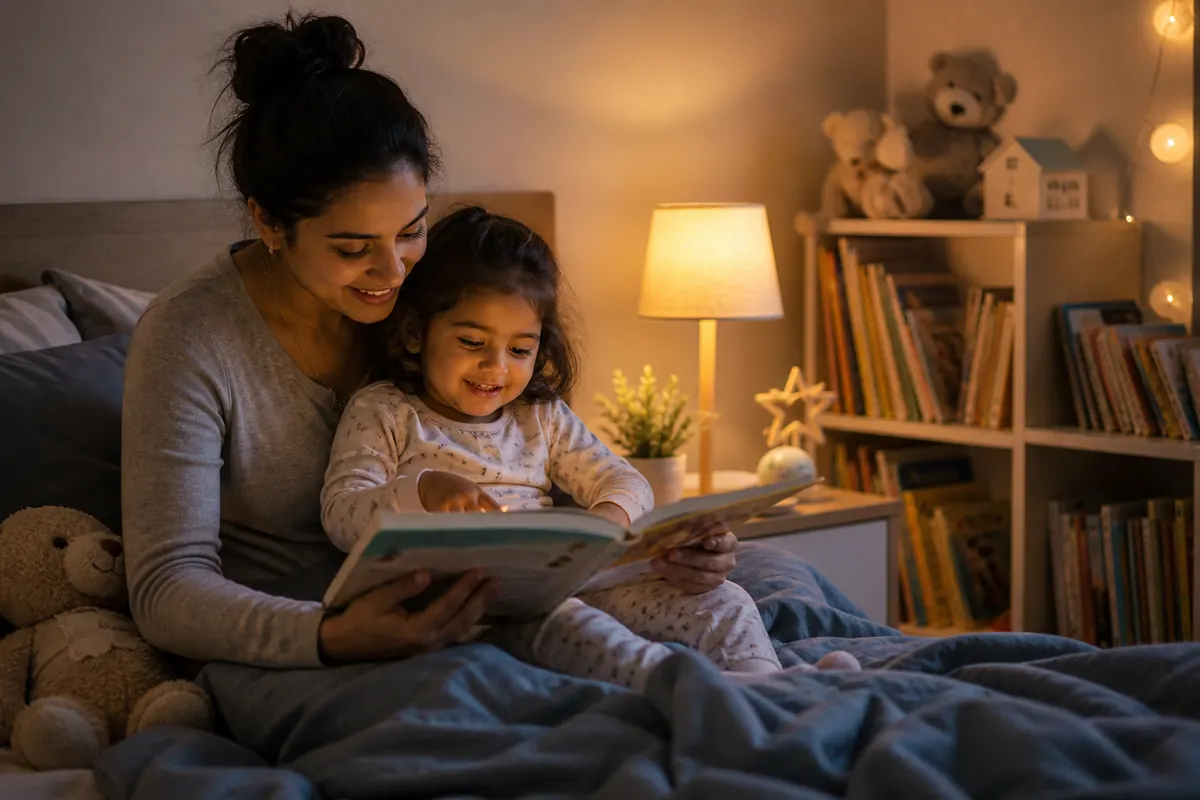
Choose one of the three stories before you begin. Read the first few lines, then follow your child’s response. You might repeat a phrase, point to a real cup nearby, or leave out a paragraph. A child who wants more detail can have it; a child who wants the ending can have that too.
Make a very short version on tired nights
Try: “Duck took off two boots. Duck put on two slippers. Dad opened a book. Duck had a hug.” This gives you a whole small story without needing to finish the longer version.
Choose the next story by interest
- Everyday objects: start with The Little Cup.
- Joining in: try Duck’s Two Boots and repeat a favorite line.
- Vehicles: choose The Little Bus Is Home.
These are reading suggestions, not a rule that all two-year-olds need the same plot or vocabulary. For more ways to pause and respond, see how to read aloud to toddlers.
Fit the story into your evening
Offer a choice of two stories, read the chosen one, and end with your usual goodnight phrase. If your child asks for the same one tomorrow, it can stay on the list. See our guide to repeating stories and bedtime routine ideas.
Looking for a little more conversation? The three-year-old story guide has gentle ideas you can adapt. For older siblings, compare bedtime stories for ages 2–5.
Frequently asked questions
How long should a bedtime story for a 2-year-old be?
Start with one tiny story and pause when your child has had enough. A few minutes can be a useful starting point, but there is no required reading time. Repeat a favorite or shorten it to a few lines to suit tonight.
Is it okay to read the same bedtime story every night?
Yes. You can keep a favorite in the routine and offer a different story when your child is interested. There is no need to replace a story simply because you have read it many times.
What if my two-year-old will not sit still for a story?
Try reading beside them while they play quietly, letting them turn pages, or telling a tiny story aloud. Stop if they are upset or no longer interested; finishing every word is optional.
Are these bedtime stories free to read?
Yes. The three complete stories on this page are free to read without an account. They are original website examples, not excerpts from the Baboo Stories app.
Sources behind the reading guidance
These stories and practical suggestions are website originals. Age labels are starting points, not developmental tests. ZERO TO THREE describes repetition, familiar subjects and following a toddler’s interest in Read Early and Often. The American Academy of Pediatrics encourages children to choose books, including favorites they want repeated, in Tips to Help Your Child Enjoy Reading Aloud.
Tonight’s story is sorted
Keep more short, gentle stories ready for another evening with Baboo Stories. Parents read the text aloud in their own voice and can shorten or adapt each story to suit the moment.
The app is free to download. Some stories are locked, and an optional monthly subscription unlocks all stories.