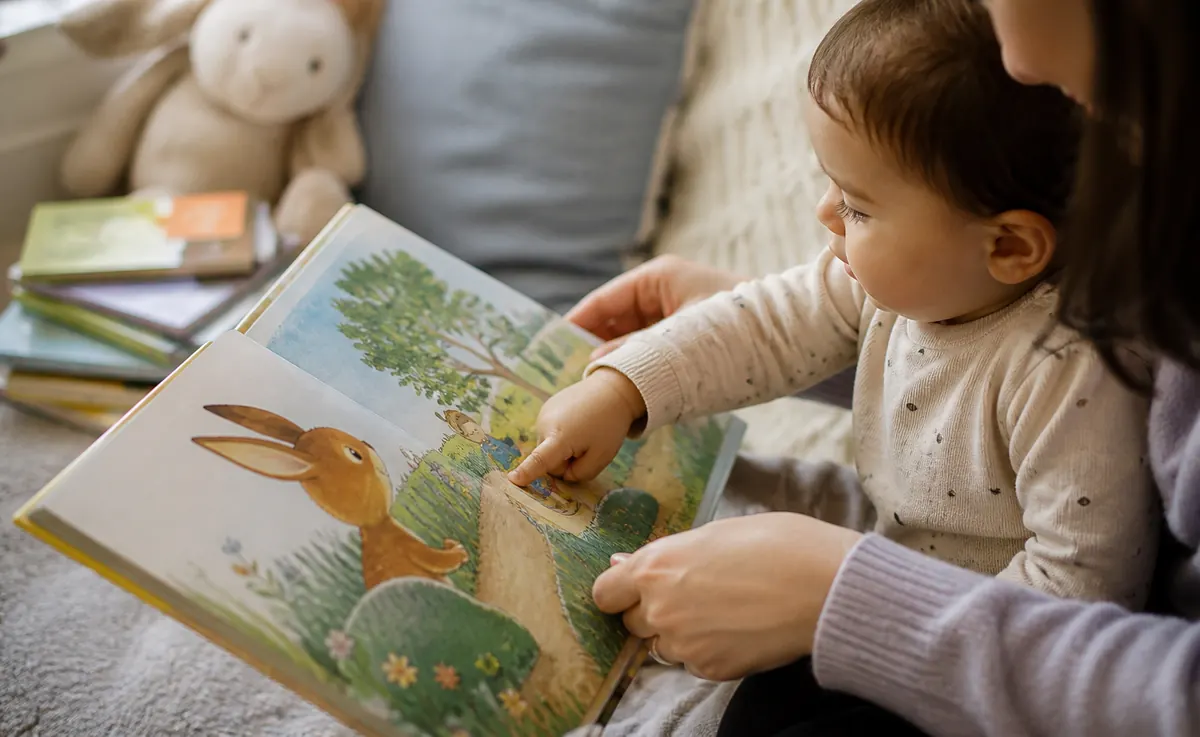
Many parents want to know how to make toddlers love story time, especially when their child wiggles, interrupts, grabs the book, or loses interest after two pages.
Here is the reassuring truth: toddlers are not designed to sit politely through a perfect read-aloud. They learn through movement, repetition, choice, sound, closeness, and play. A toddler who points at one picture for a whole minute, asks for the same page again, or walks around while listening may still be taking in the story.
The goal is not to finish the book. The goal is to help your child associate stories with safety, delight, attention, and their own imagination. That is how story time becomes something toddlers ask for, not something parents have to force.
Why story time matters for toddlers
Shared reading gives toddlers far more than early literacy practice. The American Academy of Pediatrics recommends shared reading from infancy through at least kindergarten because it supports parent-child relationships, language-rich interaction, school readiness, and social-emotional development.
NAEYC describes toddler read-alouds as a chance for "serve and return" interaction: your child points, babbles, asks, laughs, or comments, and you respond. That back-and-forth is where the learning lives. It builds vocabulary, attention, memory, and emotional understanding without turning story time into a drill.
If you want the wider child-development case, start with our guide to the benefits of story time. This article focuses on the practical part: making toddlers actually enjoy it.
1. Start with five minutes
A toddler story routine does not need to be long. Five focused, cuddly minutes can be more effective than a 25-minute session that turns into negotiation.
Begin with one short book, one story scene, or even three favorite pages. Stop while your child is still comfortable. Ending on a good note helps story time feel like something worth returning to tomorrow.
2. Let your toddler choose the story
Toddlers love control in small, safe doses. Instead of asking "What do you want to read?" and opening the whole bookshelf, offer two choices: "Truck story or sleepy bear story?"
This gives your child ownership without overwhelming them. It also makes the transition into reading smoother because the story begins with their decision.
3. Read the same story again and again
Repetition can be tiring for adults, but it is gold for toddlers. Familiar stories help children predict what comes next, remember new words, join repeated phrases, and feel confident.
If your child asks for the same story every night, you are not failing to provide variety. Your child is practicing mastery.
4. Use voices, sounds, and pauses
Toddlers often love the performance around the story as much as the words themselves. Make the giant whisper. Let the tiny mouse speak loudly. Pause before a repeated line and let your child fill it in.
You do not need to be theatrical. One funny sound, one whispered sentence, or one dramatic "Uh-oh" can make a story feel alive.
5. Let them move while listening
A toddler who will not sit still is not necessarily a toddler who hates stories. Some children listen better while standing, rocking, touching a blanket, or acting out part of the scene.
Try giving your child a job: roar for the lion, tap the floor when the rain starts, tuck in the toy bear, or point to every moon in the pictures. Movement can become participation.
Make tonight's story easier
Baboo Stories helps parents turn short stories into warm, interactive moments with gentle prompts, child-friendly themes, and parent-led reading built for busy evenings.


6. Ask comments before questions
Many adults accidentally turn story time into a quiz: "What color is that? What animal is this? How many apples?" Questions can be useful, but too many make reading feel like work.
Try comments first. "That dog looks proud." "The little boat is going into big waves." "I wonder if she feels nervous." Comments give your child language they can copy and ideas they can respond to.
NAEYC's toddler reading guidance puts it beautifully in practice: describe, add information, connect the picture to your child's life, and keep reading as a dialogue rather than a quiz.
7. Connect stories to real life
Toddlers love stories that echo their own world: bath time, shoes, grandparents, pets, snacks, rain, daycare, parks, feelings, and tiny daily dramas.
When a story mentions a bus, say, "We saw a bus this morning." When a character misses a parent, say, "That felt a bit like daycare drop-off." These small links help toddlers understand that stories are not separate from life. Stories help explain life.
8. Build a cozy cue
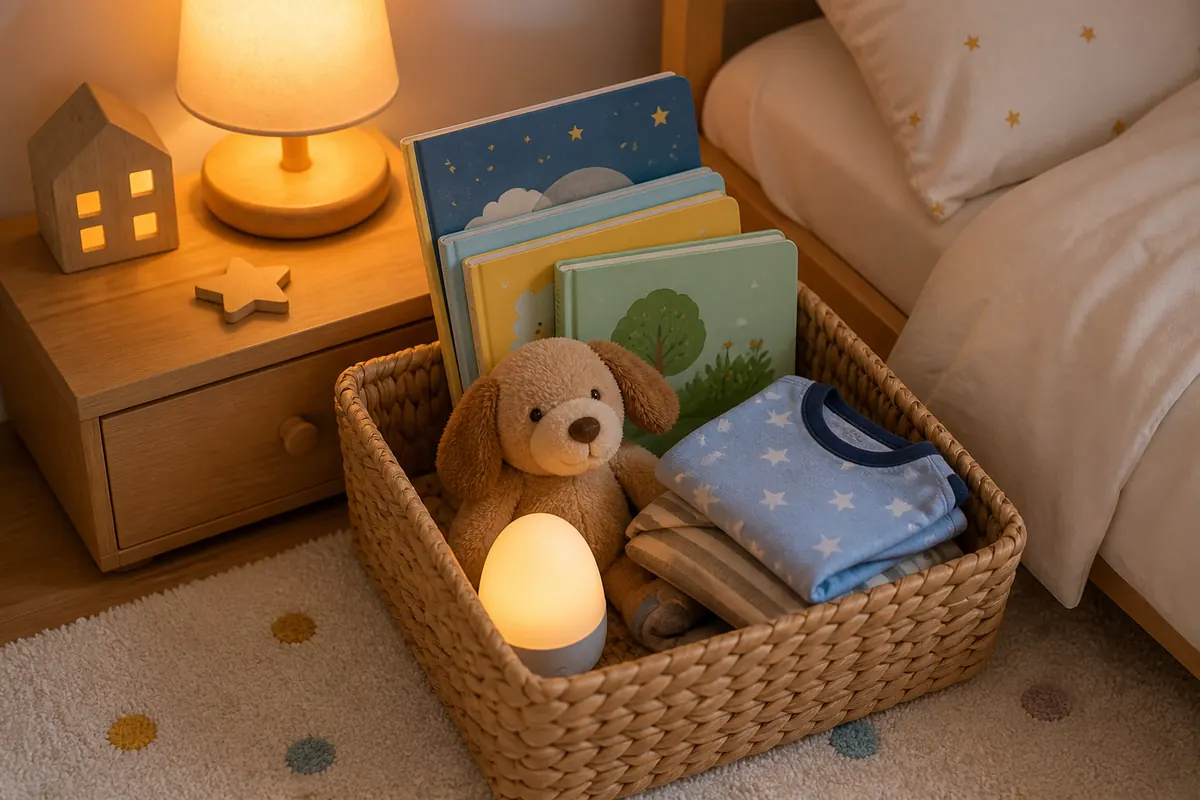
The CDC notes that routines help children know what to expect. For story time, a cue can be very simple: dimmer lights, one soft blanket, a story basket, a special chair, or the same opening line.
Predictability makes the transition easier. Over time, the cue says, "Now we slow down and read together."
9. Keep books within reach
A toddler who can reach books can begin story time throughout the day. Keep a few sturdy books or story options in a basket near the sofa, bed, play mat, or diaper bag.
You are not trying to create a perfect mini library. You are making stories easy to start.
10. Use stories during transitions
Toddlers often resist transitions because they do not know what is coming next. A short story can act as a bridge: before nap, after bath, during a waiting moment, or when the day feels a little too loud.
For evenings, pair this article with our kids evening routine for ages 2 to 5 or the 5-minute bedtime story guide.
11. Match the story to your child's mood
A high-energy toddler may not want a slow sleepy story at 5:30 p.m. They may need a playful story first, then a calmer one later. A tired toddler may need fewer words and more pointing. A worried toddler may need a familiar character who feels safe.
Choose stories for the child in front of you, not the imaginary child who sits still every night.
12. Make your child the co-storyteller
Around age 2, many children are ready to take small turns leading the story. Ask:
- "What should the bunny do next?"
- "Who is hiding behind the tree?"
- "Can you show me the sleepy face?"
- "Should we make the ending silly or calm?"
For more ideas, use our story role play guide or our storytelling prompts for kids.
13. Do not force finishing
Toddlers often skip pages, backtrack, or close the book early. That is normal. Finishing the book is an adult goal; enjoying the story is the toddler goal.
If your child closes the book, you can say, "All done with this one. Good choice." That respect keeps reading emotionally safe.
14. Use technology as a shared tool
Story apps can support families when they are designed around parent-child interaction. NAEYC's guidance for infants and toddlers says technology works best when an adult is present as a mediator and co-player, and when it avoids passive screen time.
That is the line to keep: use digital stories to give parents more story ideas, calmer prompts, and flexible choices. Keep your voice, your questions, and your child's responses at the center. Read our comparison of parent-led storytelling vs auto-play story apps for a deeper bedtime breakdown.
15. Make story time feel like belonging
The strongest story time habit is not built by perfect books, perfect voices, or perfect routines. It is built when a child feels, "This is our time."
Use your child's name. Choose stories with families, places, and feelings they recognize. Let them laugh. Let them interrupt. Let them say the silly line again. When story time feels like belonging, toddlers come back to it.
Quick story time routine for toddlers
Swipe or scroll horizontally to compare all columns.
| Step | What to do | Why it works |
|---|---|---|
| 1 minute | Offer two story choices. | Gives your toddler ownership without overload. |
| 3 to 7 minutes | Read with pauses, pointing, and simple sounds. | Keeps reading interactive and language-rich. |
| 1 minute | Ask one gentle prompt: "What was your favorite part?" | Invites conversation without making it a test. |
| 30 seconds | Use the same closing phrase every time. | Creates predictability and a calm ending. |
What to do if your toddler says no
If your toddler refuses story time, make the ask smaller. Try one picture, one page, one silly voice, or one bedtime story from Baboo while your child holds a toy. You can also read beside them without demanding attention. Some toddlers drift closer once the pressure is gone.
If the refusal happens only at bedtime, the issue may be tiredness rather than books. Try story time earlier in the evening, or use our guide for a toddler who will not sleep.
Common questions parents ask
How long should toddler story time be?
Start with 5 to 10 minutes. Some toddlers can enjoy longer sessions, but short and consistent is better than long and stressful.
What if my toddler only wants one book?
That is normal. Repetition helps toddlers build confidence, vocabulary, memory, and prediction skills. You can add variety by changing voices, asking a new prompt, or acting out one scene.
Should I teach letters during story time?
You can point out print naturally, but avoid turning toddler story time into flash-card practice. Conversation, listening, new words, and shared attention are more important at this age.
Can Baboo Stories help if I am too tired to invent stories?
Yes. Baboo Stories gives you short, gentle story ideas and parent-friendly prompts so you can still lead a warm story time without having to create everything from scratch.
Sources and further reading
- American Academy of Pediatrics: Literacy Promotion policy statement
- NAEYC: Reading Aloud with Infants and Toddlers
- NAEYC: Toddlers and Reading: Describe but Don't Drill
- CDC: Tips for Building Structure
- NAEYC: Technology and Young Children, Infants and Toddlers
Help your toddler fall in love with stories
Join Baboo Stories Free Stories & Updates for gentle toddler stories, parent-led prompts, and simple ideas that make story time easier to start and easier to repeat.
For stories you can read in your own voice, explore Baboo Stories. The app is free to download; an optional monthly subscription unlocks all stories.