Try these ideas with our three free bedtime stories for two-year-olds, or compare story choices for ages 2–5.
Many parents quietly wonder: is it okay to read the same story every night? The short answer is yes. For toddlers and preschoolers, wanting the same book again and again is normal, useful, and often deeply comforting.
Adults usually read for novelty. Young children often read for mastery. A familiar story lets them know what is coming, practice the same words, spot details they missed before, and feel proud when they can "read" part of the story from memory.
Repetition only becomes a concern when it crowds out all curiosity, keeps your child stuck in distress, or turns reading into a battle. Most of the time, the answer is not to stop repeating stories. It is to repeat favorites well while keeping a gentle path open to new books.
Why toddlers ask for the same story over and over
Toddlers live in a world full of new words, rules, places, and feelings. A favorite story gives them something rare: control. They know the cover. They know the silly page. They know the ending. That predictability can make story time feel safe.
Repeated books also let toddlers participate before they can truly read. They can point before the page turns, shout the repeated line, correct you if you skip a word, and predict what the character will do next. That participation is not stubbornness. It is practice.
The American Academy of Pediatrics tells parents that 2-year-olds can enjoy sharing the same book "over and over," and recommends making books part of a calm bedtime routine. That guidance matters because repeated book requests are not a warning sign by themselves; they are expected toddler behavior.
What repetition does for language, memory, and confidence
Repetition helps children move from hearing language to owning it. A word that sounded new on Monday may feel familiar by Friday. A phrase that was passive listening last week may become a phrase your child says out loud this week.
A 2018 meta-analysis by Flack, Field and Horst examined 38 studies involving 2,455 children. It found that reading style and other factors moderated word learning; it identified story repetition as an area needing further research. That finding does not establish a required number of repeated readings.
Shared reading is also linked with broader language outcomes. Reach Out and Read summarizes more than 20 studies showing that families in its pediatric literacy program read more often and that children in participating families show higher language scores. In one study of 200 parent-child pairs, children exposed to Reach Out and Read had higher receptive vocabulary scores than children at the comparison clinic.
Should children hear the same story repeatedly?
Yes, especially in the toddler and preschool years. Repeated stories give children more chances to hear rhythm, sentence patterns, emotional language, sequencing words, and new vocabulary in a familiar setting.
The key is not just repetition; it is responsive repetition. On the first reading, you might simply enjoy the book. On the second, you might pause for your child to finish a line. On the third, you might ask, "How does the bear feel now?" The book stays the same, but your child's thinking keeps growing.
This is why repeated reading often builds confidence. A child who feels lost in a brand-new book can feel capable in a familiar one. That confidence can make them more willing to talk, ask questions, and eventually try new stories.
Signs it is time to introduce new stories
You do not need to remove the favorite book. Instead, look for signs that your child is ready for a wider rotation:
- They can retell the favorite story easily from memory.
- They ask questions about other characters, places, or animals.
- They seem restless even during the favorite pages.
- They choose a book but disengage quickly every night.
- They are using the same story to avoid bedtime limits.
When you see these signs, add new choices gently. "Tonight we can read your bear book, and then choose one new adventure." This keeps the comfort while widening the library.
A healthy balance between favorite stories and new books
A practical rhythm for many families is the "favorite plus one" approach. Read one familiar story your child loves, then offer one newer story, shorter story, or story from a nearby theme.
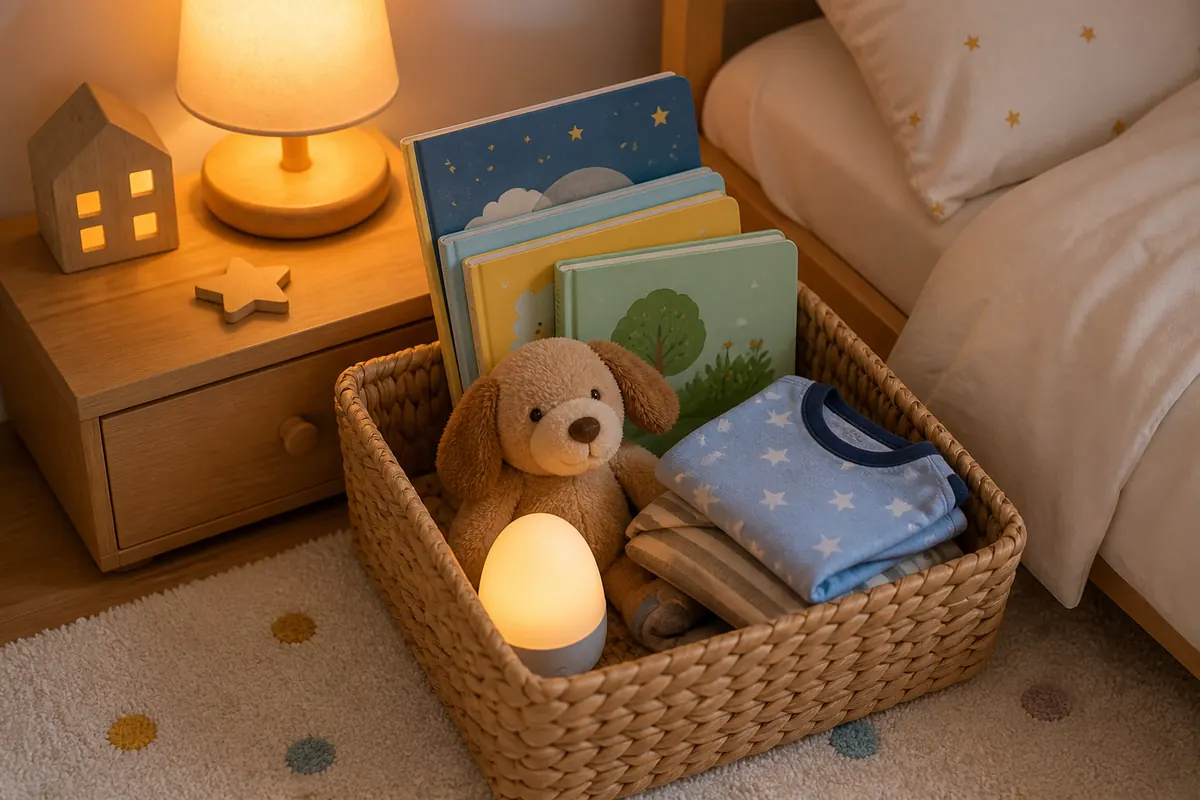
You can also use a simple three-basket system:
- Always favorites: books your child can choose any night.
- This week: two or three newer books to rotate in.
- Later: books that are too long, too intense, or not interesting yet.
If you are wondering how often should you introduce new books to toddlers, try one or two new options each week. Some children want more variety. Some want less. The goal is not a perfect number; it is a steady mix of comfort and curiosity.
Tips for keeping repeated readings engaging
Repeating a story does not mean reading it the exact same way every time. Small changes can keep the experience fresh without removing the comfort your child wants.
- Pause before a repeated phrase and let your child say it.
- Ask one feeling question: "Was she worried or excited?"
- Invite a prediction even though your child knows the answer.
- Choose one picture detail to notice together.
- Use a whisper voice for sleepy pages and a bright voice for funny pages.
- Retell one page from another character's point of view.
- Connect the story to real life: "We saw a dog like that today."
For more interactive ideas, see our guide on how to read aloud to toddlers. If repetition happens at night, pair it with a calm sequence from our toddler bedtime routine guide.
Common myths about repeating stories
Myth: Repeating books makes children less curious. In reality, familiar stories can give children the confidence to notice new details and ask deeper questions.
Myth: If a child memorizes a book, it no longer helps. Memorizing lines is part of early literacy. It helps children hear language patterns, practice sequencing, and feel like active readers.
Myth: Parents must force variety every night. Variety is useful, but pressure can make story time feel tense. Add novelty beside the favorite, not instead of it.
Myth: Digital stories do not count. A story app can support reading when the adult stays involved, reads aloud, asks questions, and keeps the experience parent-led. Passive autoplay is different from shared reading.
Practical recommendations by age
Swipe or scroll horizontally to compare all columns.
| Age | How repetition helps | Healthy balance |
|---|---|---|
| Babies | Voice, rhythm, closeness, and familiar sounds | Repeat short, musical books often |
| 1-2 years | Object names, pointing, sounds, and simple phrases | Keep sturdy favorites available and add picture-rich books |
| 2-3 years | Prediction, vocabulary, turn-taking, and confidence | Use "favorite plus one" most nights |
| 3-5 years | Story structure, feelings, memory, and retelling | Add new themes, longer plots, and child-created endings |
For age-specific story ideas, visit our guide to bedtime stories by age.
Research and sources
- American Academy of Pediatrics: sharing books with 2- and 3-year-olds
- Flack, Field and Horst (2018): shared storybook reading and word learning
- Horst, Parsons, and Bryan: contextual repetition and word learning from storybooks
- Reach Out and Read evidence summary
- Sharif, Reiber, and Ozuah: vocabulary outcomes in inner-city preschoolers
Conclusion
Repeating stories is not a bad habit. For many children, it is how favorite words become familiar, how plot becomes memory, how confidence grows, and how bedtime begins to feel safe.
Keep the beloved book. Read it again. Then keep a small, growing library nearby so your child always has a bridge from the comfort of a favorite story to the excitement of something new.
Baboo Stories is built for that balance: familiar, gentle story moments children can return to, with fresh stories ready when they are curious for the next adventure.
For stories you can read in your own voice, explore Baboo Stories. The app is free to download; an optional monthly subscription unlocks all stories.
Find your next read-aloud story
Choose a short story and read it aloud in your own voice. Baboo Stories is free to download; some stories are locked, and an optional monthly subscription unlocks all stories.